About Resistance Box
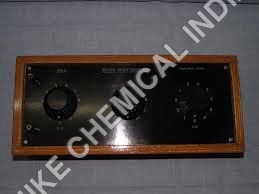
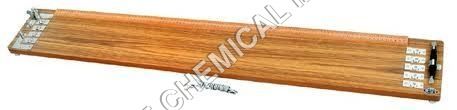
Clients can avail from us Resistance Box (Dial Type) that is widely demanded for electrical practical and demonstration in school and colleges. This resistance box is designed with multiple plugs for measuring the electrical values like voltage, current and resistance in a hassle-free and accurate manner. The provided resistance box is designed and manufactured by our adept professionals using supreme quality components and contemporary techniques as per international standards. Besides this, the offered Resistance Box (Dial Type) can be purchased from us at negotiable prices.
Features:
-
Interchangeable pullout plugs for insertion in any plot
-
Compact, simple, durable and interconnected design
-
Easy and secure fixation of plugs to reduce contact error
-
Easy pullout and insertion of plugs
Details:
Resistance Box Dial Type : The dial studs are machine cut from phosphorous bronze and laminated bush contact are made from hardened copper phosphot bronze leaves. The laminated bushed are connected to the main central contact. Individual resistors are mounted separately. The values of resistors are machine engraved or Screen Painted. Technical Details : Double covered Eureka wire is wounded on Bakelite spools. Each resistor is processed for ageing and heat treatment to avoid shifting of the values and tested individually to accuracy after fixing Carbon Resistance. Resistance are calibrated on imported testing Bridge Accuracy +0.1%
Versatile Decade Resistance RangeThis resistance box supports a wide range of resistance values, from as low as 1 up to 10,000, which can be easily set using rotary knob switches. The decade step values allow users to select precise resistance increments, making it suitable for a variety of experiments, circuit prototyping, and calibration routines in laboratory settings.
Premium Construction and User-Friendly DesignWith a smooth polished wood exterior and robust brass terminals, the resistance box is engineered to provide longevity and convenience. The bench-top, rectangular form factor ensures stability. Its clearly marked printed scale and tactile rotary knobs facilitate quick and accurate resistance selection for users, whether theyre students or professionals.
Precise and Reliable ResultsEngineered with a tolerance of 1% and temperature resistance up to 40C (ambient), this resistance box ensures consistent and accurate measurements. Its manual, power-free operation means it remains reliable and independent of electrical supply, ideal for prolonged lab use. Multiple resistance steps and a compact footprint further enhance its practicality.
FAQs of Resistance Box:
Q: How do I use the resistance box to select a specific resistance value in my circuit?
A: To select a specific resistance, turn the rotary knob switches corresponding to each decade (1, 10, 100, 1k, 10k) until the sum matches your desired value. Connect your circuit to the brass terminals using banana plugs or crocodile clips. The resistance is instantly engaged once the switches are set.
Q: What types of laboratory applications is this resistance box suitable for?
A: This resistance box is ideal for calibrating measuring instruments, simulating various load conditions, prototyping, and educational experiments. Its versatility makes it useful in physics and electronics labs for testing, teaching, and research applications requiring accurate variable resistance.
Q: Where should I install or place the resistance box during experiments?
A: Place the resistance box on a stable, flat laboratory bench for best results. Its bench-top design ensures stability and easy access to the rotary switches and terminals during experiments or demonstrations.
Q: When is it necessary to use the resistance box instead of fixed resistors?
A: Whenever your experiments or calibrations require variable resistance values or adjustable steps without rewiring, the resistance box offers a convenient and efficient replacement for multiple fixed resistors. It enables quick changes and precise settings during iterative procedures.
Q: What are the benefits of the brass with nickel-plated contact and terminal design?
A: Brass contacts and terminals, enhanced by nickel plating, provide excellent conductivity, corrosion resistance, and durability. This ensures long-term reliability and secure connections for banana plugs or crocodile clips during repeated laboratory use.
Q: Is external power needed for operation and how does the manual control work?
A: No external power is required. The resistance is set manually by rotating the control knobs, making it independent of power supply. This manual process allows flexible use in any lab environment without the need for electrical outlets.



 Send Inquiry



 Send Inquiry


