About Micrometer Screw Gauge
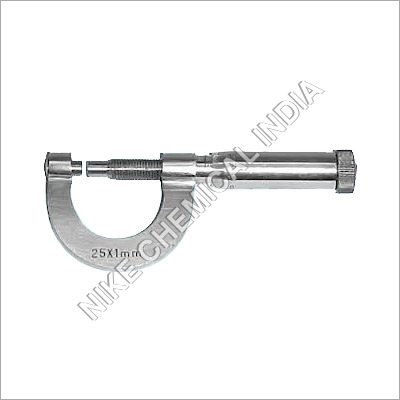
Bestowed with experienced professionals, our firm is reckoned in this domain as the ISO certified manufacturer, exporter and supplier of Micrometer Screw Gauge. The provided screw gauge is basically intended for the precise measurement of dimensions of small materials. This screw gauge is designed and manufactured with high level of precision by utilizing the finest quality metal alloys and pioneering techniques in conformity with international quality standards. Besides this, we offer this Micrometer Screw Gauge to the clients at affordable prices.
Features:
-
Easy to rotate frictionless spindles
-
Simple, light-weight and compact design
-
Resistant to corrosion and impact
-
Free from zero error for precise and quick measurement
Precision Engineering for Demanding ApplicationsEngineered for industrial and laboratory professionals, this micrometer screw gauge ensures repeatable accuracy with every use. Its hardened steel anvil and molded frame provide resilience against wear, while the ratchet stop and lock nut mechanisms help maintain consistency during repeated measurements. The ergonomic knurled thimble and C-shaped frame make handling and reading straightforward for improved workflow.
Manual Control and Effortless OperationWith a manual control system and easy-to-read vernier/analog display, this micrometer screw gauge offers straightforward measurement without the need for batteries or electrical connections. The powder-coated or painted finish enhances grip and prevents corrosion, making it a practical choice for intensive industrial and laboratory use.
Reliable Measurement PerformanceAchieving an accuracy of 0.01 mm within a range of 0-25 mm, this gauge supports detailed measurements across a variety of applications. Its standardized dimensions (approximately 100mm x 40mm x 15mm) and moderate weight (about 250 grams) facilitate both ease of use and portability for daily measurement tasks.
FAQs of Micrometer Screw Gauge:
Q: How do I use the micrometer screw gauge for measuring small objects?
A: To measure an object, first ensure the spindle and anvil are clean. Place the object between them and rotate the knurled thimble until the object is gently secured between the faces. Use the ratchet mechanism for consistent pressure, lock the reading in place with the lock nut, and then record the measurement from the vernier/analog scale.
Q: What materials are used in the construction of this micrometer screw gauge?
A: The frame is made from steel or cast iron with a powder-coated or painted finish for durability. The anvil is crafted from hardened steel, and the thimble is knurled for better grip. All main components are metal to sustain industrial use.
Q: When should I use a micrometer screw gauge instead of a vernier caliper?
A: Use a micrometer screw gauge when you require higher precision for measuring small objects or thicknesses, as it offers an accuracy of up to 0.01 mm, which is typically greater than most vernier calipers.
Q: Where can the micrometer screw gauge be effectively used?
A: This instrument is suited for various settings, including industrial manufacturing, mechanical workshops, scientific laboratories, and quality control departments where precise measurement of small parts is essential.
Q: What is the process for ensuring accurate and repeatable measurements?
A: Always clean the measuring faces and object before use. Close the spindle gently using the ratchet mechanism to standardize pressure, and use the lock nut to secure the reading. Regularly calibrate the micrometer to maintain its accuracy.
Q: What are the main benefits of the ratchet stop and lock nut mechanisms?
A: The ratchet stop ensures consistent measuring pressure, preventing excessive force that could affect accuracy. The lock nut holds the spindle position, allowing you to record measurements without risk of accidental movement.



 Send Inquiry



 Send Inquiry


