About Laboratory Plasticware
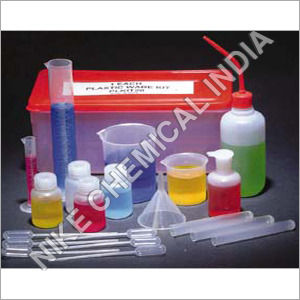
Consists of wash bottles, measuring cylinders, tubes and beakers, the offered Laboratory Plasticware is widely demanded in laboratory and research centers. This plasticware is well-suited for storing and dispensing various kinds of chemicals in a safe manner while carrying out specific reactions. This plasticware is manufactured by our ingenuous professionals using optimal quality plastic polymers and advanced techniques in conformance with international quality standards. Besides this, clients can purchase this Laboratory Plasticware from us in different capacities, designs and sizes at affordable prices.
Features:
-
Compact, portable and light-weight
-
Rugged design and crack resistance
-
Withstand high and low temperature for prolonged time
-
Easy to clean, fill and use
Laboratory plasticware refers to a variety of tools and equipment made from different types of plastic used in laboratories for scientific experiments, measurements, and procedures. Plasticware offers several advantages over glassware, including durability, lower cost, and resistance to breakage. Here is an overview of common laboratory plasticware and their uses:
Types of Laboratory Plasticware
-
Beakers:
- Made of polypropylene or polystyrene.
- Used for mixing, stirring, and heating chemicals.
-
Flasks:
- Erlenmeyer Flasks: Conical shape, made from polypropylene or polycarbonate.
- Volumetric Flasks: Made from polypropylene for preparing precise standard solutions.
-
Test Tubes:
- Made from polystyrene, polypropylene, or polyethylene.
- Used for holding, mixing, and heating small quantities of liquids.
-
Pipettes:
- Transfer Pipettes: Made from polyethylene, used for transferring liquids.
- Graduated Pipettes: Made from polystyrene or polypropylene, used for measuring and transferring precise volumes.
-
Burettes:
- Made from polypropylene or other durable plastics.
- Used in titration for delivering precise volumes of a liquid reagent.
-
Graduated Cylinders:
- Made from polypropylene or polymethylpentene.
- Used for measuring precise volumes of liquids.
-
Petri Dishes:
- Made from polystyrene or polypropylene.
- Used for culturing microorganisms.
-
Funnels:
- Made from polyethylene, polypropylene, or polystyrene.
- Used with filter paper for filtration or for transferring liquids.
-
Centrifuge Tubes:
- Made from polypropylene or polycarbonate.
- Used in centrifugation to separate components in a mixture.
-
Microplates:
- Made from polystyrene or polypropylene.
- Used for high-throughput screening, assays, and culturing cells.
-
Cryovials:
- Made from polypropylene.
- Used for storing biological samples at very low temperatures.
-
Pipette Tips:
- Made from polypropylene.
- Used with micropipettes for precise liquid handling.
Properties and Advantages
- Durability: Resistant to breaking and shattering, making them safer to handle.
- Chemical Resistance: Certain plastics are resistant to a wide range of chemicals.
- Cost-Effective: Generally less expensive than glassware.
- Lightweight: Easier to handle and transport.
- Autoclavable: Many types of plasticware can be sterilized by autoclaving.
Maintenance and Safety
- Cleaning: Proper cleaning with detergents and thorough rinsing is essential to prevent contamination. Some plasticware can be autoclaved for sterilization.
- Handling: While more durable than glass, plasticware should still be handled with care to avoid scratching or chemical degradation.
- Storage: Store plasticware in cool, dry places away from direct sunlight to prevent degradation.
Applications
- Chemical Analysis: Used for various types of chemical testing and experiments.
- Biological Studies: Ideal for microbiology, cell culture, and molecular biology applications.
- Educational Laboratories: Widely used in schools and universities for safety and cost reasons.
- Clinical and Medical Labs: Used in diagnostic testing, sample storage, and other medical procedures.
Versatile Color and Design OptionsChoose from transparent, white, amber, or assorted color laboratory plasticware to best suit your workflow or visibility needs. Whether you need clear visibility for measurement or colored containers for sorting, our range accommodates every requirement. Select items also feature stackable and ergonomic designs to optimize laboratory storage and handling.
Reliability and Compliance AssuredEach piece of plasticware is manufactured under stringent quality processes and meets ASTM and ISO standards for lab equipment. Our products offer robust resistance to acids, bases, and various solvents, making them suitable for a broad spectrum of laboratory applications, including research, analysis, and sample storage.
Multiple Sterilization OptionsEnsure your laboratorys aseptic standards with our plasticware, compatible with ethylene oxide, gamma sterilization, and select items that are autoclavable. This flexibility allows you to maintain sterility effectively to suit the specific requirements of your procedures and environment.
FAQs of Laboratory Plasticware:
Q: How do I choose between the available color options for laboratory plasticware?
A: Selecting a color option depends on your laboratorys workflow and organizational system. Transparent plasticware is optimal for content visibility and measurement accuracy, while colored or amber options help protect sensitive samples from light or aid in sorting by experiment, sample type, or user.
Q: What sterilization methods can be used with this laboratory plasticware?
A: Our plasticware supports multiple sterilization methods: select models are autoclavable, while all items are compatible with ethylene oxide and gamma sterilization. Always refer to the product details to confirm the recommended method based on the specific material and item type.
Q: When should I use laboratory plasticware over glassware?
A: Laboratory plasticware is ideal when you need lightweight, shatterproof containers, chemical resistance, or reusable options with flexible handling. They are especially suited for storage, general mixing, and sampling, or when working with acids, bases, or solvents that might interact with glass.
Q: Where can I use these laboratory plasticware items?
A: These plasticware items are suitable for academic, industrial, research, and clinical settings. Their robust construction, chemical resistance, and compliance with international standards ensure reliability across diverse laboratory environments.
Q: What are the benefits of the stackable and smooth finish features?
A: Stackable designs facilitate efficient storage and organization, maximizing lab space. The smooth finish allows for quick cleaning and reduces the likelihood of residue build-up, improving workflow and maintaining sample purity.
Q: How should I maintain and clean laboratory plasticware?
A: Rinse plasticware immediately after use with appropriate solvents or detergents. For sterilization and thorough cleaning, utilize compatible methods like autoclaving (for selected models), ethylene oxide, or gamma exposure. Avoid abrasive pads to maintain the clarity and calibration markings.



 Send Inquiry


 Send Inquiry


