About Laboratory Flywheel
Since the inception of our organization in 1992, we are affianced to manufacture, export and supply a wide assortment of Fly Wheel. The offered wheel is manufactured using superior-quality metal alloys and ultramodern techniques in adherence with international quality standards. This wheel is widely demanded in schools and colleges to carry out experiments related to moment of inertia. Available in several diameters and finishes, this Fly Wheel is offered to the clients at market leading prices.
Features:
-
Ideal for quick and error-free readings
-
Wide turned and carefully balanced design
-
Securely placed on horizontal shaft
-
Designed with ball bearings to assure frictionless movements
Details:
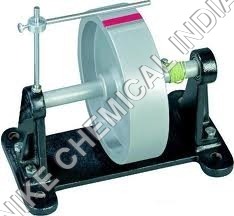
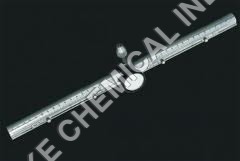
About 20cm. in dia and 45mm. wide turned and carefully balanced, mounted on a horizontal shaft, held in ball bearings.The wheel is marked and pointer is fixed to the bracket.The bracket has four holes and can be fixed to the wall..
Precision and Versatility in Laboratory ApplicationsOur Laboratory Flywheel serves as an essential instrument for physics laboratories, supporting a broad range of scientific inquiries and demonstrations. Its availability in multiple sizes helps educators and researchers tailor experiments, ensuring accurate results and enhanced learning outcomes. Stainless steel construction provides both strength and enduring value.
Quality Materials for Reliable PerformanceConstructed entirely from metal, with a stainless steel exterior, the flywheel guarantees excellent durability and resistance against wear. This makes it ideal for repetitive use in demanding lab environments, maintaining its functionality over time without the need for frequent replacement.
FAQs of Laboratory Flywheel:
Q: How is the Laboratory Flywheel used in laboratory settings?
A: The Laboratory Flywheel is typically employed in physics experiments to demonstrate rotational motion, energy conservation, and angular momentum. Its stable design enables consistent results in educational demonstrations and research activities.
Q: What materials are used in the construction of the Laboratory Flywheel?
A: This flywheel is made entirely from metal with high-quality stainless steel for durability and corrosion resistance, ensuring reliable performance in laboratory environments.
Q: When should I consider different flywheel sizes for my experiments?
A: Select the flywheel size20cm, 25cm, or 30cmbased on your experimental needs. Larger dimensions are useful for demonstrations requiring greater rotational inertia, whereas smaller sizes are suitable for compact setups or specific research requirements.
Q: Where can I purchase the Laboratory Flywheel in India?
A: The flywheel is available through a network of distributors, exporters, manufacturers, retailers, suppliers, and wholesalers across India. This ensures convenient access and competitive pricing for laboratories throughout the country.
Q: What is the process for obtaining the Laboratory Flywheel?
A: To acquire the flywheel, contact authorized suppliers or retailers in India. You may request quotations or bulk orders directly from manufacturers or wholesalers for efficient procurement, depending on your quantity requirements.
Q: What are the benefits of using a stainless steel flywheel in the laboratory?
A: Stainless steel provides robust durability, excellent resistance to corrosion, and consistent performance over time, making the flywheel ideal for laboratories with frequent usage or exposure to varying environmental conditions.



 Send Inquiry



 Send Inquiry


